Vehicle equipment and parts selection
What to check for brakes, engines, suspension and bodywork.
Build an enquiry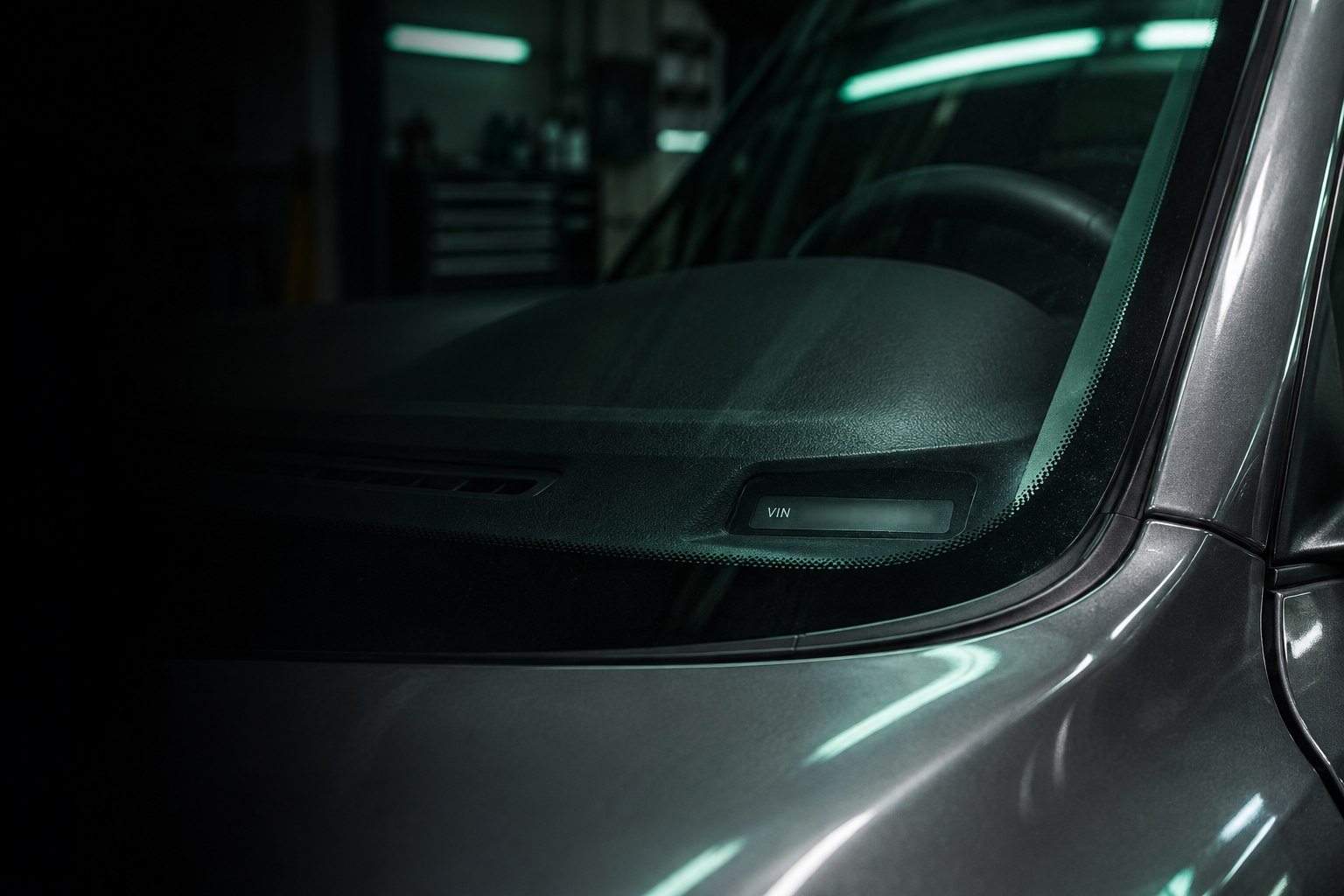 VIN
Where to find your VIN
Check the lower corner of the windscreen or the label inside the driver’s door opening. You can also check the number against the vehicle registration document.
How to read a VIN
Select a group to see what those positions mean.
1–3Manufacturer code
The first three positions form the World Manufacturer Identifier, or WMI.
4–8Vehicle attributes (VDS)
The manufacturer uses these positions to encode vehicle attributes according to its own scheme.
9Check digit
Current EU and US formats use this position to check how a VIN was entered. Older European vehicles can use different formats.
10–17Vehicle identification (VIS)
These characters, together with the rest of the VIN, identify an individual vehicle.
For vehicles labelled under US rules, position 10 encodes the model year and position 11 the assembly plant.
Vehicle equipment and parts selection
Look up the VIN in the manufacturer’s catalogue and check the factory equipment. If an assembly was replaced, check the markings on the part now fitted.
Brakes
Give the axle, braking system code or the marking on the fitted part. Disc dimensions may also be needed.
Engine and gearbox
Check the engine or gearbox code and the part number. Mention any previous replacement.
Suspension
Specify the axle and side. The suspension and drivetrain types may affect the choice.
Bodywork and lights
Specify the side and body style. For a headlamp, check the lighting type and the number on the housing.
What to include in your enquiry
A VIN and the name of the part are enough to start an enquiry. The VIN helps identify the vehicle in the parts catalogue. A number or a clear photo of the fitted part’s markings can help when the catalogue lists several options or the assembly has been replaced.
- The vehicle VIN. If you type it manually, check the characters against the vehicle documents or identification plate.
- The part name and fitting position. Specify front or rear axle and left or right side where relevant.
- The part number or a clear photo of the markings, if available. Mention any previous replacement or modification to the assembly.
- The quantity and your preference. You can ask for a genuine part, a suitable aftermarket option, or both for comparison.
What to check before ordering
Check the part number on the quote, fitment, quantity and what comes in the set. If there are two options, ask what differs and what details are needed to choose. For brake pads, for example, you may need to identify the braking system or check the markings on the fitted assembly.
Find car parts